
Representing/Roma/Holocaust: Exhibition Experiences in Europe and East Asia
DOI:
https://doi.org/10.29098/crs.v4i2.82Keywords:
Exhibition, Holocaust, Genocide, Memory, PhotographyAbstract
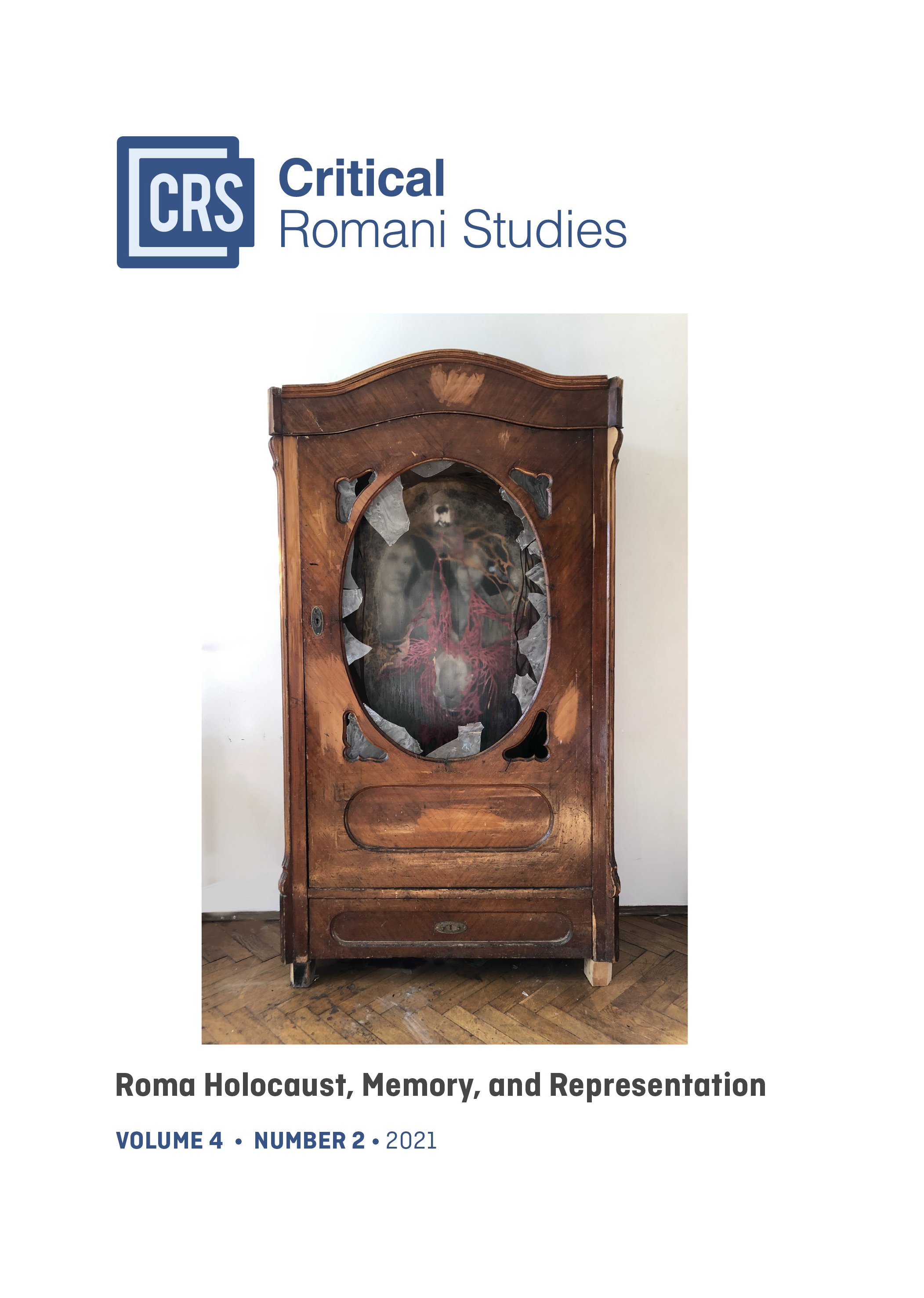
This article reflects on two exhibitions, in 2018 and 2019, about the Nazi persecution of German Sinti and Roma. One was produced by an Anglo-German curatorial team and toured Britain and Continental Europe. The second was designed by South Korean curators and installed temporarily in a gallery in downtown Seoul. The two exhibitions drew on the same photographic archive, narrated the persecution histories of Romani subjects of the photographs, and used the story of their relationship with the non-Romani photographer to ask questions about responsibility and to prompt visitors to reflect on their own status as “implicated subjects” in contemporary forms of discrimination. Given different expectations of the level of knowledge that visitors bring to the exhibition and different communicative tools familiar to them (the Seoul curators included creative artists), the two curatorial teams took very different approaches to informing and moving their audiences – and to meeting the recognized challenges of representing Romani history and identity – not least in the ways in which the exhibition’s message was mediated in face-to-face conversations on site. The aesthetic approach adopted in Seoul did not fully succeed in maintaining the balance between explanation and exoticization. The evaluation relies on visitor surveys (quantitative and qualitative) and interviews with guides.
Downloads
Published
Issue
Section
License
Authors who publish with this journal agree to the following terms:
- Authors retain copyright and grant the journal right of first publication. The work is licensed under a Creative Commons Attribution-NonCommercial License that allows others to share the work with an acknowledgement of the work's authorship and initial publication in this journal.
- Authors are able to enter into separate, additional contractual arrangements for the non-exclusive distribution of the journal's published version of the work (e.g., post it to an institutional repository or publish it in a book), with an acknowledgement of its initial publication in this journal.